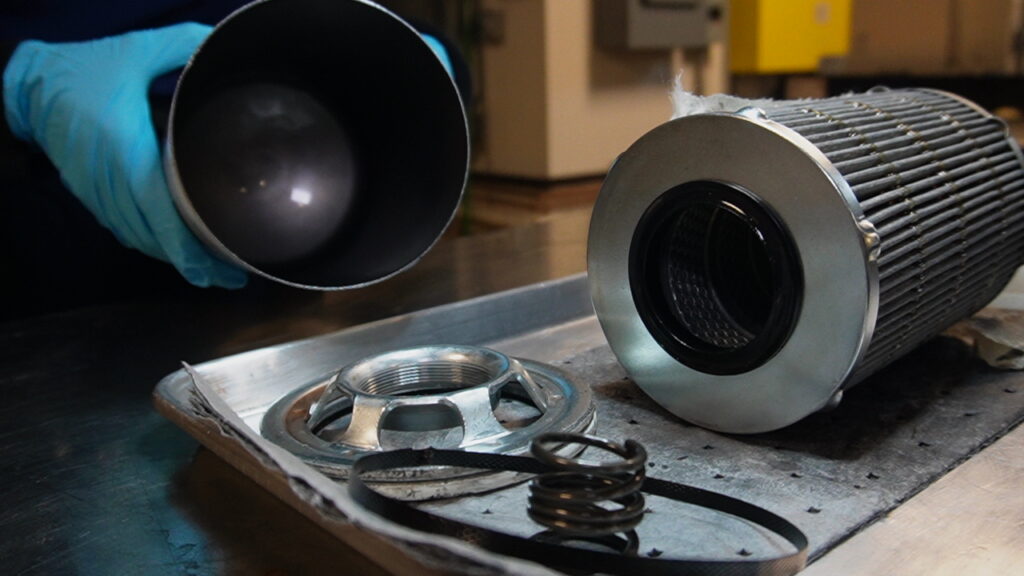
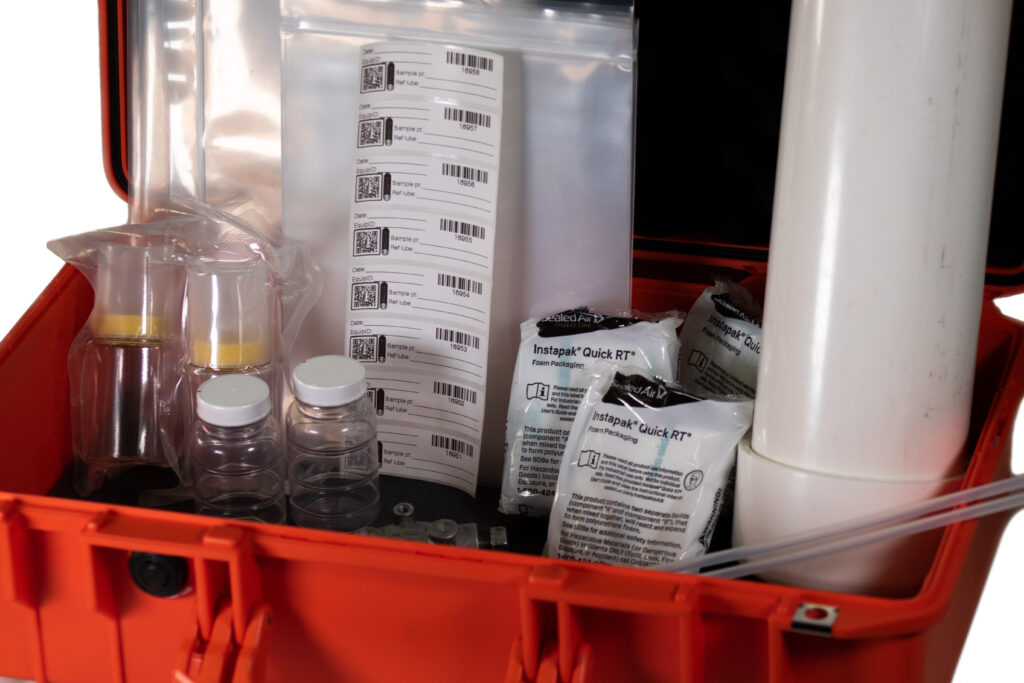
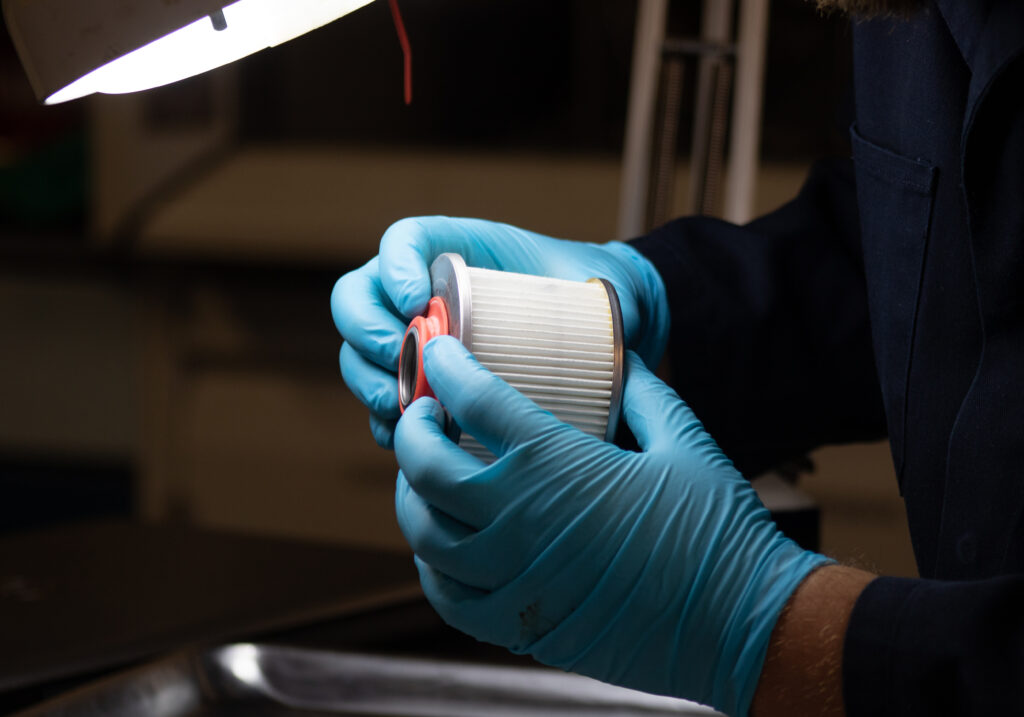
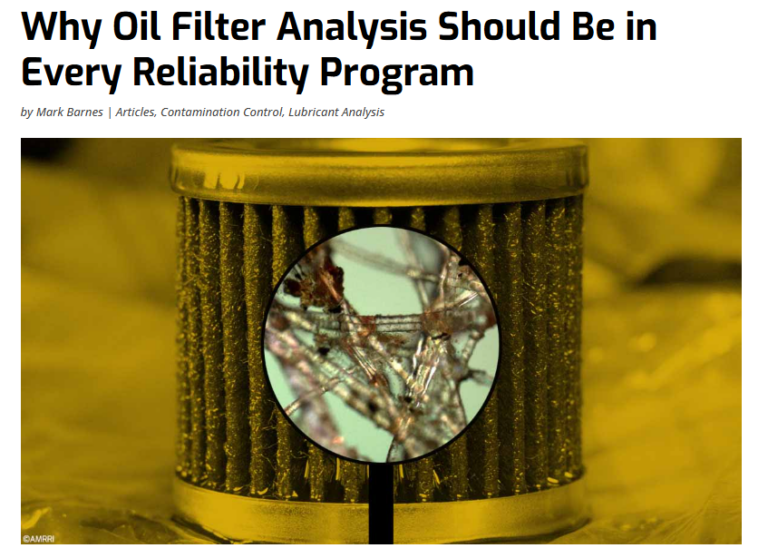
MRG Labs follows filter analysis standards outlined in ASTM D7919 and is a valuable tool for assessing the condition and corrective action required for a filter. MRG will conduct physical inspection upon arrival, images of condition, lube analysis of oil inside filter and from asset, and backwash of filter for particle inspection. A sample is extracted from the filter and analyzed using the instruments in our lab. This may include elemental Spectrometer, microscope inspection, measuring ferrous wear with the FTIR, and further identifying ferrous debris with analytical ferrography.
Filter analysis includes a complete report of the wear or contamination within the filter and recommendations for further monitoring and corrective actions. MRG additionally utilizes root cause failure analysis to determine the core issue and suggestions for rectification.
Turn around for testing is 10 days, unless explicit instructions are provided by the customer.
SAMPLE CASE
Filter Analysis with Microbial Activity
An examination was performed on two filters from a steam turbine and an oil sample from the return line of the unit to determine the cause of premature filter failure. Analyses performed were analytical ferrography to identify any wear particles and fibers present in the filters, microscopic examination of the filter medium to assess the condition, and oil analysis. The test slate for the oil analysis included FTIR, water concentration, elemental analysis, viscosity, and analytical ferrography.
Microscopic inspection of the filter revealed foreign particulate that was “fibrous” in nature, which contained a high percentage of elemental flourine (F) by mass. While analyzing the filters through Analytical Ferrography, it appeared that there were several moving particles. Upon this observation, the adenosine triphosphate (ATP) test was implemented to detect the presence of or active growth of microorganisms. The ATP test reported 35 picograms (pg) per milliliter (mL) for the oil sample, which is considered a marginal result for most lubricating oils. The filter medium measured 1940pg/g, which is considered an elevated result.
The wear and moisture levels in the oil sample were acceptable. While extracting particulate from the filters with solvent, some wear was shown, including iron (Fe), copper (Cu), and zinc (Zn). However, the filters analyzed represent a concentration of wear particulate, and the wear levels were not considered excessive.
Recommendations moving forward included further investigation of microbial levels in the system and considering potential recurring mechanisms for ingression of microorganisms. An additional recommendation was ensuring that identifying product information is available to guarantee proper filter procurement methodology.
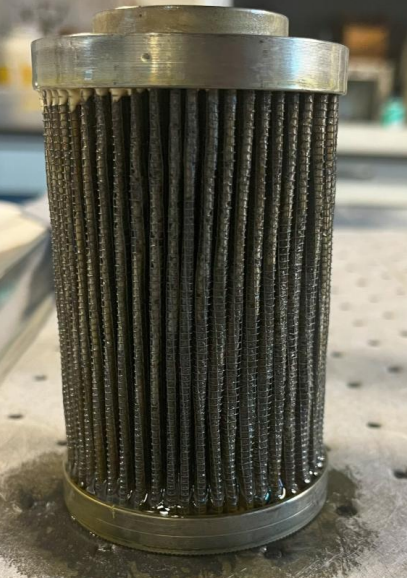
Filter from a steam turbine
Microbial contents moving under various light settings
Microbial contents moving within the filter medium
Microbial contents moving within the filter medium
Click here to read Precision Lubrication’s article that features our filter analysis with microbial activity case!