
IS THERE A LUBE SUPPLY CRISIS ON THE HORIZON?
- It is very likely that lubricant shortages will be surfacing again soon
- An article published by Independent Lubricant Manufacturers Association (ILMA) states that API Group II suppliers are starting to allocate customers, as well as shifting from contract to higher posted prices
- ILMA suspects that Group II refiners will be next given how refinery economics incentivize a shift for the production of diesel
RECENT EVENTS
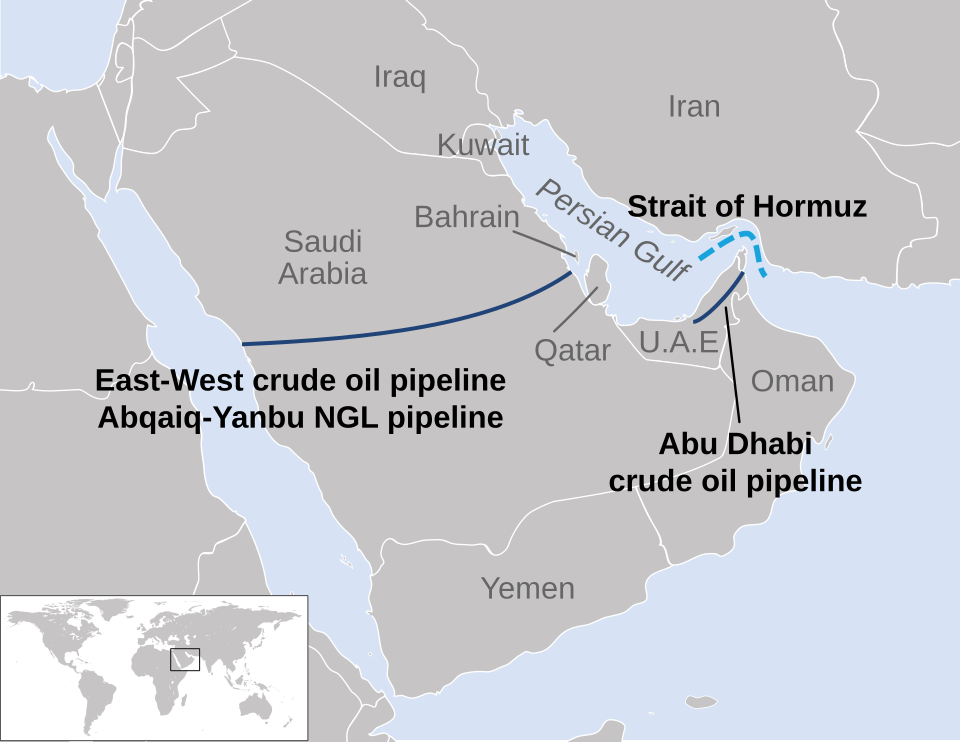
The recent war that has begun in the Middle East, involving the US, Iran, Israel, and other countries in the region has had a significant impact on the Straight of Hormuz, which is the narrow opening between Iran and the Arabian peninsula. Much of the world’s petroleum shipments are controlled through this high-traffic and narrow maritime passage. Around 20% of the world’s liquefied natural gas and 25% of seaborne oil trade was passing through Hormuz every year.
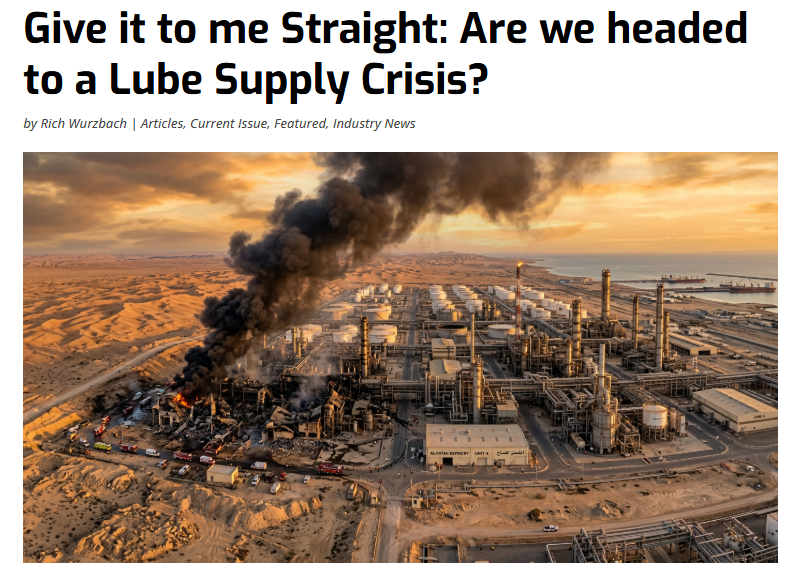
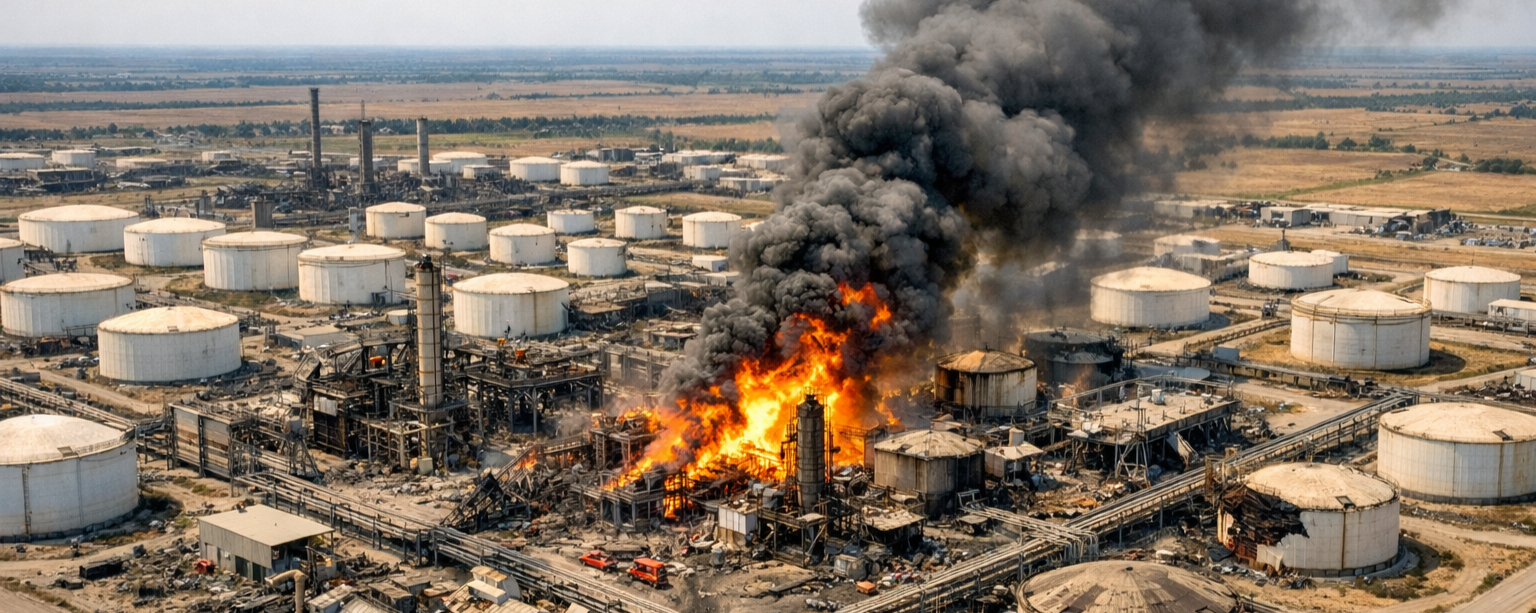
After Iran came under attack, they launched missile strikes on neighboring countries, including UAE, Kuwait, and Bahrain. In the aftermath of the strikes, multiple key lubricant production facilities were severely disabled, including ADNOC Base Oil Facility in Abu Dhabi. An additional threat of “closure” of the straight by Iran was imposed, followed by an embargo of the region by the US Navy. Ultimately, the recent conflict has been marked as a disruption to key lubrication products that has never been this extreme before.
WHAT IS ALREADY BEING DONE?
STLE held a special panel discussion in New Orleans to discuss upcoming concerns and projections after recent events.
Rationing of the lubricant supply to dealers
Noticeable shortages of automobile lubricants
Potential for manufacturer’s and production facilities to be unable to procure the lubricants necessary for outages and turnarounds
WHAT IS THE SOLUTION?
- An effective solution is for asset owners to review existing strategies and programs regarding lubricant use, consumption, and disposal.
- End-of-life calculations on a machine frequently incorporate broad assumptions regarding the condition of the machine
- Due to these assumptions, lubricants get replaced or disposed of before their potential end-of-life point and the demand for lubricant falsely increases.
- It is important for asset owners to re-assess their current strategies and programs in order to save money and preserve lubricants, especially with a shortage on the horizon.
HOW CAN YOU PROTECT YOURSELF AND OPERATIONS FROM PENDING DISRUPTION?
Oil changes have been the primary method to fix oil degradation for most individuals. However, the problem with oil changes is that all of the oil is rarely removed from the system. A more effective method is using removal systems such as filtration, vacuum dehydration, and even advanced systems that remove varnish and their pre-cursors. This can prolong a scheduled oil change by extending the life of the oil that has already been purchased.
When the interval-based PM informs you that new order and a replacement is needed, check the oil analysis results first to see if that is really necessary. Oil that is “scheduled” for replacement oftentimes has remaining life.
For years, condition-based strategy did not appear to be an effective option for grease, only oils. However, the American Society for Testing and Materials (ASTM) has introduced standards for Inservice Sampling (D7719) and Integrated Tester Method for Analysis (D7918) and those limitations are gone.
As a result, many industries and applications have begun demonstrating the value of optimized grease replenishment. Studies have shown that when grease analysis is used to direct optimal replenishments, there is a reduction in grease purchases, labor, and disposal costs.
Recently, there has been an increased focus in developing solutions to extend lubricant life, and large reservoirs and oil quantities have been regarded in this process by attempting to re-introduce depleted additives. An example of this is the replenishment of anti-oxidant additives when oil analysis identifies a decreasing trend. The mixing and re-introduction, alongside the lubricant formulator, has proven to be successful. Various additives can be restored this way on occasion, resulting in an extended oil life and decrease in demand. Decreasing a quarter of a sump’s volume, and adding that quantity of new oil back to the reservoir, can be a factor in extending the useful lifetime of the oil/lubricant.
Turbine oils are typically found in large-volume reservoirs, which can raise concern and pushback on the substantial impact that imminent oil changes bring to the budget. The introduction of solubility enhancers is a recent development in oil life-extension strategies. In contrast with the historical experience of Group I oils, the appearance of Group II base oils in the primary turbine oil formulations has caused the occurrence of deposited varnish at a much more sudden and unexpected rate.
Fluitec has been a reliant source of varnish monitoring by conducting Linear Sweep Voltammetry with the RULER device and the introduction of the Membrane Patch Colorimetry test. With a focus on the oil oxidation process, there is now a search for solutions, and the introduction of solubility enhancers tuned to the chemistry of the degraded lubricant and its additives. Now partnered with ExxonMobil, there is a new strategy to extend the useful life of turbine oils, reduce demand for the replacement, and refilling of large-volume reservoirs.
Greasing is often viewed as a necessary evil that is done to prevent high-dollar damage and repairs. However, over-greasing is a larger contributer to bearing failure than under-greasing. Ultrasound monitoring is a complimentary piece of technology that is effective in reducing grease demand by including the precision that is often overlooked in greasing.